We have briefly reviewed the census records, and we are still working to identify the origins and ethnicities of many village residents. Please let…
Immigration and diversity
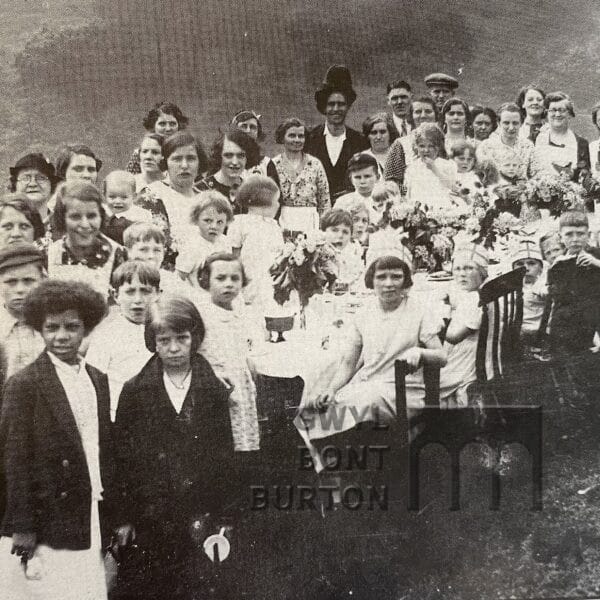
We have briefly reviewed the census records, and we are still working to identify the origins and ethnicities of many village residents. Please let…
Before the Industrial Revolution, Wales was largely rural, the country had few large towns and saw little immigration.
The exploitation of mineral resources from the 18th century, driven largely by English industrialists and landowners, attracted more people seeking work.
Census highlights
1841–1851: Early Movement
The 1841 census does not record an individual’s birthplace, but by 1851, our review found that many locals were born elsewhere, mostly from Carmarthenshire. Others came from Pembrokeshire, Devon, and Ireland. In 1851, the majority of residents were born in Glamorgan, with a large influx coming from Carmarthenshire.
1871: Continental Connections
The 1871 census records shows that there were two French-born residents. Louisa Wallers from Strasbourg and David Thomas (not a very French name) from Paris.
This year records increasing numbers of residents coming from Gloucestershire and Wiltshire.
1861: Irish Immigration
Several families had travelled from Devon, Cambridgeshire and Staffordshire. But by 1861, several families had arrived from Ireland probably emigrating following the Irish Famine. It was recorded that over 30,000 Irish immigrants had come to Wales by 1861.
EXPANDING DIVERSITY: 1891–1901
In 1891, an Alexander Malichart (Milchard), Watch trader from Germany was captured as living in Lletty lwyd House (?Tonmawr).
He wasn’t recorded as being a visitor. A high proportion of residents living in Fforcdwm (Tonmawr) this year are recorded as coming from ’England’. In Pontrhydyfen, there were larger numbers of residents originally coming from mid and east Wales such as Monmouthshire & Brecon.
1901: Industrial Migration
In 1901 The Schoolmasters wife (Sarah Forsythe Evans) was born in Aberdeenshire, whilst their son Edward (born in the City of London) who was working as the village station master.
Our German watchmaker Alexander Milchard is still living in Fforchdwm. The village and surrounding area was still attracting migrants from Yorkshire, Lincolnshire and mid Wales to work in the local collieries and railways.
The vast majority of Welsh born residents were bilingual. There was increasing numbers of English born residents living in the village (London, Kent, Yorkshire to name a few). Dr Farquhar William Matheson from Inverness is recorded living with his family at The Surgery, Twynypandy.
A high proportion of English born residents were working on the railways. Perhaps someone could help us with the background story of Benjamin & Florence Williams & family, living in 2 Curwen Tce.
At some point they had lived in the USA, their two eldest children were born in New York before the family came to Tonmawr where the rest of the children were born. Where are the row of house called 1-9 Pontrhydyfen, neighbouring addresses include Danybont and Cwm Ifan Bach and are recorded alongside the Oakwood returns.
The 1921 census is the most recent census to be publicly available and depending on your age, you may recognise names or relatives, and even people you may have met.
In 1921 the population of Pontrhydyfen and Efail fach at this point was well over 2,000 residents, which is more than double of what it is now. Women are now more commonly found in the workforce, travelling up and down the Afan valley.
This connectivity has also seen the arrival of several families from the Americas, Africa and the Middle East. We have included the following


