Faces of the Fallen

Biographies of the men who served from the villages of Bryn, Pontrhydyfen and Tonmawr.

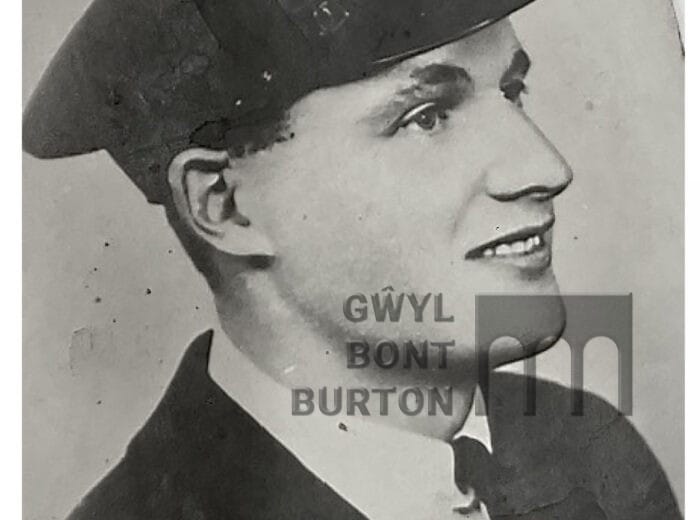
Air Fitter (A) Gordon Allan Channon (1916–1945) L/FX79055 HMS Exeter, RN

Biographies of the men who served from the villages of Bryn, Pontrhydyfen and Tonmawr.

Merchant Seaman Hassan Ali (?1885–1918)

Hassan Ali (or Alli) was born in Aden, Yemen, approximately in 1885. Aden is a port city located in the southern part of the Arabian Peninsula, serving as a gateway between the Arabian Sea and the Red Sea. According to his marriage certificate, his father Mohammed was a farmer. Currently, there is no additional information available regarding Hassan’s family. The 1911 census records Hassan residing at 52 Ruby Street, Roath, Cardiff, employed as a seaman—presumably working on ships arriving at Cardiff Docks. He was living with Florence Margaret (née Margetson), identified as his wife, along with her niece. The circumstances under which they met remain unclear, as does how Florence came to settle in Cardiff, given her family’s background as agricultural labourers in Tivertshall, Norfolk. In 1911, members of the Margetson family were documented in Goytre and in Efail Fach, Pontrhydyfen. Subsequently, the couple married in 1914 at Neath Registry Office, though the marriage certificate lists them at separate addresses in Goytre at the time. Hassan is noted as working as a fireman at the steel works. By this stage, they already had a daughter, Zina, born in Cardiff in 1912. It is believed the family relocated to Curwen Terrace, Pontrhydyfen, where their son Arthur was born in 1915. In the following years, Hassan rejoined the Merchant Navy, likely serving as a ship’s fireman and trimmer. The exact circumstances surrounding Hassan’s death remain uncertain. By 1921, Florence was recorded as a widow, living with her children in Tonmawr Road and employed as a domestic worker. She remarried during the 1930s and, according to the 1939 register, was residing with her second husband (a retired railway signalman) and her son Arthur at 1 Wern View, Pontrhydyfen. Arthur, now an adult, was employed as a coal hewer and sadly passed away at the age of 28 in 1944. Zina, Hassan and Florence’s daughter, later married and moved first to Briton Ferry and subsequently to Albion Road, Port Talbot. Note: The following information has been submitted to the Commonwealth War Graves Commission for review: On May 9th, 1918, the SS Baron Ailsa, operated by the Kelvin Shipping Co., was transporting coal for the war effort when it was torpedoed and sunk by SMS UB-72 off the Pembrokeshire coast, resulting in the loss of ten lives. A newspaper account of the coroner’s inquest details the vessel’s rapid sinking in less than a minute and describes survivors being rescued by the USS Fanning (DD-37). The report mentioned that “An Ali Hasan (28), an Arab fireman,” was among those rescued from the water but subsequently died shortly after rescue. Although the age differs by five years from Hassan Alli commemorated on the Pontrhydyfen war memorial, the body was interred in Milford Haven in an unmarked grave. This information has been submitted to the Commission to ascertain if this individual was Florence’s husband. Regardless of the outcome, a request has been made for a headstone to be placed on the grave in accordance with the commemoration of other World War I servicemen. We await the Commission’s decision.
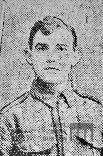
Photo sepia of 2nd Lt. Thomas Green (1887 – 1916) DCM

2nd Lt. Thomas Green (1887 – 1916) DCMDCM 22489, Royal Garrison Artillery, 10th Siege Bty

Thomas was born in Swansea, his parents Thomas and Ann were originally from Gloucestershire, but they moved with their young family to Swansea where Thomas worked as a gardener to the Dillwyn and Vivian families in Parcwern House, Sketty. In 1911, Thomas is recorded as serving as acting Bombardier, Royal Artillery Barracks Great Yarmouth. He was awarded a DCM in early 1916 for conspicuous gallantry. His Commonwealth Graves record links his wife Kate living in Great Yarmouth and his father Thomas living in Swansea.

Sgt. W. Berry

We think that this gentleman has links to Bryn. On the Commonwealth War Graves Commission (CWGC) website, there are three Sgt. W Berry’s with links directly to South Wales. A single newspaper record on 16th January 1915, links one of these men to the published minutes of a meeting held by Margam District Council which would discuss issues relevant to Bryn and Mynydd Bychan. A letter written by a Lance-Corporal William Berry, 6536 C. Company, 1st Bn. Somerset Light Infantry, thanks the council for a parcel he received. Written from the trenches, William goes on to say what a difference a change of underclothing has made to him. Our research shows that William came from a mariner’s family in Pill, Somerset. The family moved to Barry, Glamorgan. William is recorded as still living in Barry in 1911, prior to his enlistment. We are unable to confirm if William has any further links to Bryn and if he is the man commemorated on the memorial. But in 1916, William had been promoted to Sergeant. On 21st October his regiment is fighting in Gillemont in the Somme. He is recorded as dying that day. Over 114 million parcels were sent to troops in WW1, some from families and friends, others distributed by the Red Cross, municipal organisations and even gifts organised by the British Royal family. Their primary aim was to boost morale and contained everyday items such as soap, underwear, non-perishable food. Contact us if you know more.
Sgt. Sidney Thomas Chatham (1889–1918)

Sgt. Sidney Thomas Chatham (1889–1918)18801, Royal Welch Fusiliers, 14th Btn.

Born in Llanelli, Carmarthenshire, Sidney lived with his parents (Stephen and Sarah) and siblings. By 1911, the family were living in 19 Maesteg Road Bryn. Sidney was working as a brick setter. He joined the Royal Welch Fusiliers, disembarked in France on December 2nd, 1915, and was in time promoted to Sergeant. In August 1918, a series of coordinated allied military attacks began on the Western Front. Known as the ‘Hundred Days Offensive,’ this time marked the final phase of conflict against a weakening German Army. The victory did not come without cost, with the Allies suffered over one million casualties and the Germans over 1.1 million. On October 20th, 1918, The Royal Welch Fusiliers documented 42 casualties. Sydney is recorded as being killed in action, aged 29 years at Charlton J. Chedzoy, Flanders, barely 3 weeks before the war ended. He is memorialised on the Vis-en-Artois Memorial, Pas de Calais, France. His mother Sarah is named on his war pension records and as executor of his will. In the 1921 census,Sarah is widowed, still living in Bryn. Some of his siblings remained in Bryn and his younger brother Edgar went onto name his son after Sidney.
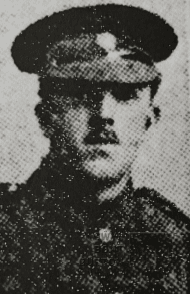
m Frederick Crees_ (1886–1915) 13986, Royal Engineers, 17th Field Coy_

Bertram Frederick Crees* (1886–1915) 13986, Royal Engineers, 17th Field Coy

Bertram was born in Ashwick, Dulverton, Somerset and lived at the Police Station with his parents (John Frederick and Emily) and several of his siblings. His father John was also a Police Constable and Bertram was to follow his father into a career with the police. He married Winifred, a local Somerset girl in April 1913 where it stated that Bertram was already living in Afan Vale, South Wales. He is recorded in several local Welsh newspaper reports at that time, sometimes as a “PC C REES” dealing with striking miners, local incidents in Tonmawr and Pontrhydyfen and the Afan valley. The Royal Engineers were heavily involved in intense fighting around Ypres which also saw the first large-scale use of gas by the Germans in late April 1915. Bertram is reported as being killed in action in Flanders on April 30th, 1915, aged 30 years. He is memorialised on the Menin Gate. A newspaper reported that Winifred was presented with a portrait of her husband on behalf of the village. She went onto to live in Bristol, remarried and had a son. *Please note that on our memorial, Bertram is recorded as PC CRYS.

Roger Curtis (1887–1918) 81074 East Surrey Regiment, 2nd Btn

The Curtis family were a large family, living in Efail fach from the 1850’s onwards. His parents, David Snr. (a coal miner, then farmer) and Mary, lived in Efail Fach and at Tonygregas Farm in 1901. David Roger was the only one of his siblings to be born outside of Pontrhydyfen (Onllwyn), although his maternal side of the family came from the Dulais valley. His grandfather (Thomas) was a house thatcher. David was one of three brothers to join up during the First World War (see Llewellyn CURTIS). David Roger married Mary Jane Davies, whose family lived in Blaenavon Terrace, Tonmawr. The couple went on to have a son Richard Arthur and in 1911 the census showed that they lived at 9 Blaenavon Terrace. The small family shared the house with Mary’s married sister, Ester Alice, her husband John FISHER and their small son. John Fisher is also commemorated on the Board. Sadly, the family experienced three losses in total. Two sisters each lost a husband, their sons each lost a father as well as an uncle. A newspaper records David Roger as passing away of pneumonia on 26th September 1918, in Salonica Greece, aged 33. Presumably, David may have been one of the many casualties of the 1918-19 global influenza epidemic (or Spanish Flu) that went onto claim over 25 million lives. David Roger is buried in Bralo British Cemetery, Greece. In 1921, Mary now widowed, is recorded as living with her son in 14 Blaenavon Tce and working in Tonmawr School as a school caretaker.

Rifleman. Llewellyn Curtis (1893–1915) Y/1724 Kings Royal Rifles, Corps, 3rd Btn

Born in Pontrhydyfen, Llewellyn was a younger brother of David Roger CURTIS. Llewellyn’s parents, David (a coal miner, then farmer) and Mary had a large family & lived in Efail fach and at Tonygregas Farm by 1901. In 1911, Llewellyn is living with his older brother Jenkin and his large family in Crynant, Neath. His attestation papers and war record have survived, and several facts emerge. He joined the army in September 1914; he is described as being 5’ 6”, weighing 9 stone, with a fair complexion, blue eyes and light brown hair. He is fined 5 days’ pay when he was absent without a pass in January 1915. He is recorded as dying from injuries sustained on April 9th, 1915, aged 22 in Ypres / Flanders. This was day was significant as this was the day that the German army launched a major offensive introducing poison gas as a weapon and the offensive is known as the Second Battle of Ypres. Llewellyn is memorialised on the Menin Gate. His younger brother Thomas was the only brother of the three men to survive the first world war. In 1921, Thomas and his new wife, Gladys, are recorded as their living in Brynderi, Efail Fach with his parents David & Mary.

Sapper Eli Davies (1881–1916) 156072, Royal Engineers, Tunnelling Cpy.

Eli was born in Penrhiwfer, Tonyrefail, son of Daniel (coal miner) and Elizabeth. The family had several children and lived in Penrhiwfer for all of Eli’s childhood. He married his wife Elizabeth Ann (from Llantrisant) in around 1904 and by 1911, the couple were living in 39 Mill St, Cwmfelin, Nr. Maesteg. He was working as a coal miner. Their census record showed that they had already lost a child by this time. Eli’s attestation papers survive, but they raise a few questions about how the couple supposedly married in Wigan. They show that he joined the army in early September 1914, barely 6 weeks after war broke out. He is described as weighing 11st 3lbs, was 5’ 5”, had brown hair, blue eyes and a fresh complexion. By January 1916, Eli had transferred into the Royal Engineers Tunnelling companies which had been formed to dig attacking tunnels under enemy lines. The British Army were quick to recruit skilled men, however, there was a high mortality rate amongst this group of men who often worked by candlelight in cold cramped conditions. He is reported as dying from his wounds on 21st May 1916, aged 35 years old. He is buried at Noeux-Les-Mines Communal Cemetery, Pas de Calais, France. His military papers state that Elizabeth Ann was living at 13 Station Tce, Bryn and when she had received her late husband’s war medals. The 1921, census showed that she was still living at this address, and their son Daniel was working aged 16 as a colliery doorboy.

Corp. James Davies (1886–1918) MM Deal. /3477 (S), Royal Marines, RM Medical Unit, RN Div

Born in Cwmafan, son of Sarah and Samuel (Labourer), James and his siblings soon moved to Pontrhydyfen where more children were born in the following years. The family first lived in Herbert House, Pontrhydyfen and then in 4 Pontycymmer, near to the viaduct. In 1911, James is working as a Coal Miner Hewer, supporting his widowed mother and his two sisters who were working as tin workers. He married Elizabeth Rees in Felinfoel, Llanelly, but we don’t know how the couple met. He enlisted in 1915, joining the Royal Maries medical unit. He was awarded the Military Medal in Ancre and it is reported in the London Gazette in February 1917 that “[he] displayed great courage and energy in removing patients from a position which was heavily shelled to one of great safety.” (please see copy). This record describes precisely when James passed on 20th November 1920, aged 32 years, barely 11 days after the war had ended. It is possible that James was one of the many victims of influenza, or the 1918 ‘Spanish’ Flu Pandemic which went on to claim millions of lives. He is buried in Etaples Military Cemetery, France. Several newspaper reports following his death enabled us to trace James and his wife Elizabeth, who in 1921 went to live in 2 Glyncelyn, Felinfoel. She died at the age of 82 and is buried with her parents in Felinfoel. Several of James’ siblings continued to live in the village, including Queen Street Pontrhydyfen.

William Richard Davies (1896–1917) 202819, Oxford & Bucks Light Infantry 1st / 4th Bn

Born in Pontrhydyfen, Williams’ parents, siblings and grandparents initially lived in Cerrigllwydon before his parents (David Francis and Mary) moved to Bryn Mayrig, Efail Fach. The Davies family originally came from the Llansteffan area of Carmarthenshire before initially moving to Bryn then Pontrhydyfen in the 1850’s. His mother, Mary originally came from Breconshire. His father worked as a Coal Miner Hewer, as did many of his siblings and uncles. On November 25th 1917, William’s Battalion was engaged in front line trenches near Le Sars on the Western Front. This area had known some of the bloodiest fighting in the Somme. The battalion experienced casualties from enemy fire and William was killed in action on this day, he was 21. He is buried in Brown’s Copse Cemetery, Rouex, Pas de Calais, France. His widowed father continued living at the same address in Efail-fach and can be found in the 1921 census and 1939 Register. William is also memorialised on his parents’ grave in Macpelah Chapel Cemetery.

Pte. Thomas Fielding (1885–1916) 8931, South Wales Borderers

Born in Cwmbran, Thomas lived in the Llantarnam and Cwmbran area with his parents, John Fielding and Elizabeth Murphy and many siblings. The Fielding’s were originally from Cork, Ireland. It is probable that at least three Fielding brothers came to the Abergavenny area following the 1840’s Irish Famine. Thomas’ father John was for a professional soldier, and we will pick up his story at the end of this biography. Census records show that it was common for the Fielding extended family to live with one another. In 1901, Thomas was living working as a blast furnace labourer, living with his parents and family at 10 Pritchard Terrace, Llantarnam. Thomas followed his father by enlisting into the South Wales Borderers in March 1904. Several of Thomas’ relatives moved to Pontrhydyfen during these years and by 1911, Thomas’ uncle, William Fielding was living with his family at 1 Queen Street. His cousin, Michael Fielding and family were living at The Huts, Pontrhydyfen. We have not been able to confirm that Thomas had actually lived in the village as census records only capture residents residing at an address on a specific date. By 1911, the census showed that Thomas had been posted to Pretoria South Africa. With the outbreak of war, the 1st Battalion was taken by rail to Southampton, arriving at Le Havre on 13 August 1914. Its first major baptism of fire was the Battle of the Aisne. It was deployed near the village of Vendresse from 18-20 September, and suffered further casualties during this battle at the neighbouring village of Chivy on 26 September 1914. This action marked the transition from a mobile war to the static trench warfare that would define the Western Front for years to come. Thomas is recorded as being killed in action on the 26th September 1914. He was aged 29, his body was never recovered, and he is commemorated on the La-Ferte-Sous-Jouarre memorial, Seine-et-Maine, France. The Fielding family continued to live in Pontrhydyfen and Thomas’ parents continue to live in the Llantarnam area after the war.

John Williams VC (born John Fielding 1857 – 1932).

John’s life is well documented. Born to Irish Catholic parents in Abergavenny, Monmouthshire he gave a false surname of Williams when he joined the military, it is not known exactly why. He was 21, when he was posted to South Africa during the Anglo-Zulu War in the 2nd Battalion, 24th Regiment of Foot (later the South Wales Borderers). On 22-23rd January 1879, John was at Rorke’s Drift, when along with Henry Hook, evacuated many patients from the hospital. He was awarded the Victoria Cross. Supplement to the London Gazette, 2nd May 1879, Numb 24717, pp 3177-78 His citation reads: “Private John Williams was posted with Private Joseph Williams, and Private William Horrigan, 1st Battalion 24th Regiment, in a distant room of the hospital, which they held for more than an hour, so long as they had a round of ammunition left: as communication was for the time cut off, the Zulus were enabled to advance and burst open the door; they dragged out Private Joseph Williams and two of the patients, and assegaied them. Whilst the Zulus were occupied with the slaughter of these men a lull took place, during which Private John Williams, who, with two patients, were the only men now left alive in this ward, succeeded in knocking a hole in the partition, and in taking the two patients into the next ward, where he found Private Hook. These two men together, one man working whilst the other fought and held the enemy at bay with his bayonet, broke through three more partitions, and were thus enabled to bring eight patients through a small window into the inner line of defence. and two other men held a hospital room from attackers.” John had a full military funeral in 1932 which can be seen in Pathe news reel on YouTube.Many people from Pontrhydyfen will be familiar with the film Zulu, which depicts ‘cinematic representation’ of events at Rorke’s Drift. By co-incidence, it stars two of Pontrhydyfen-born celebrities, Ivor Emmanuel and the voice of Richard Burton in the film.

Gnr. John Fisher (1886–1918) 282526, Royal Garrison Artillery

Born in Pontycymer in the Garw Valley, John lived with his parents (Noah and Elizabeth) and several siblings. He marries Ester Alice Davies who lived in Blaenavon Tce, Tonmawr in around 1908, in Neath. Ester has a sister Mary Jane who is married to David Roger Curtis (who is also commemorated on the memorial). In 1911, both sisters are living together with their husbands and children in 9 Blaenavon Tce. John is recorded as working as a Coal Haulier, underground. His attestation papers survive, John enlists on 20th August 1914, 16 days after Britain entered the First World War. He was posted on September the 9th and is described as being 5’ 8”, weighing 11st 1lb, having a fresh complexion, brown hair and blue eyes. By then he had two sons, David John (born in 1909) and Richard Arthur (born in 1912) and the family were living in 5 Upper Fforchdwm, Pontrhydyfen. Italy was an ally in WW1 and in November 1917 had suffered heavy defeats following the Battle of Caporetto. The Royal Garrison Artillery was reorganised to reinforce allied Italian troops and the lesser-known Italian Front. Records show that John was killed in action, aged 32 years on 1st January 1918 and is buried in Giavera British Cemetery, Arcade, Italy. By 1921 Alice had remarried and was living with their sons and stepchildren at 5 Blaenavon Tce.

e Bmb. John Helson (1885–1918) 606238, Royal Field Artillery, ‘B’ Bty, 293rd Bde

Born in Braunton, Devon, John lived with his father Robert (Farm labourer), mother, Eliza and siblings. By August 1902, he is recorded as working as a plate layer, living at Level Crossing, Llantwit Neath when he marries Elizabeth Barnes. By 1911, the couple were living at 1 Blaenavon Tce, Tonmawr with several children. John was now recorded as working as a Coal Miner, Hewer. He was killed in action in the Battle of Beaumetz, Flanders, on March 21st 1918, aged 34 years old. There is a regimental record of fighting that day, which states that “the enemy attacked under heavy barrage from 5:00am.” Several men were killed that day, and even more were recorded as missing (see photograph for full account). A newspaper report of his death states that he left a wife and seven children. He is buried in Beaumetz Cross Roads Cemetery, Beaumetz-Les-Cambrai, France. By 1921, Elizabeth has remarried and was living at Station Tce, Pontrhydyfen with her younger children and stepchildren. Their oldest son John had by this time married and was living with a young family in Clyne, whilst their daughter Florence was working and living as a servant in Pontrhydyfen Police Station.
David Hopkins

Pte. David Morgan Hopkins (1890–1915) 16931, South Wales Borderers, 6th Btn.

Born in Kenfig Hill in 1890, son of Hugh (Iron Roller man) and Margaret Leyshon. David came from a large family with several older siblings. An older brother, Hugh Leyshon Hopkins, wife Eleanor and family lived in 2 Station Road, Pontrhydyfen in the 1911 Census. Other member of the family were living in Cymmer at this time including David’s parents who were living in Sunnyside, Cymmer. However, David was not at either of these addresses on the night of the census. He was married in 1913 to Margaret Jane Jenkins*, who lived at 3 Horseshoe Cott, Lewis Street, Pontrhydyfen. We do not have any information about David’s military service, when or where he sustained his injuries, but he is recorded as dying from wounds in the Royal Victoria Military Hospital, Netley Hampshire on 17th November 1915 aged 25. He is buried in Macpelah Cemetery. Margaret is recorded as David’s next of kin and on his war pension records. By 1921, his brother Hugh and family were still living in Station Terrace. Margaret was also living in the same street with her younger brother. *NOTE: Margaret’s younger brother James died the following year (1916) and is also commemorated on the memorial.
Pte. James Jenkins (1892–1916) 17579, Royal Welsh (Welch) Fusiliers

Pte. James Jenkins (1892–1916) 17579, Royal Welsh (Welch) Fusiliers

James was born in Pontrhydyfen, son of William (Coal miner) and Mary Jane. In 1911, the large family lived in Horseshoe Tce (Lewis St) and were next door neighbours of the Thomas family (see Morgan Thomas). James worked as a Collier (Hewer). On July 1st 1916, the Battle of the Somme, the biggest battle of WW1 opened with the Battle of Albert with British forces capturing Gommecourt, Mountauban and Mametz. It was one of the bloodiest days in history with over 57,000 British casualties and 19,240 killed. James is listed as being killed in action in Flanders on 6th July 1916 which saw 9,850 men losing their lives on this day. James was 24 years old. He is commemorated on the Thiepval Memorial, France. His family continued to live in Lewis Street after the war, his father William is recorded as an employee of Merthyr Llantwit Colliery, Tonmawr but was out of work because of the ongoing industrial dispute. His younger sister Sarah Jane was working as a goods clerk for the Rhondda & Swansea Bay Railway Co. *NOTE: James’ elder sister, Margaret Jane, married David Morgan Hopkins in 1913. He joined the South Wales Borderers and died of his wounds in 1915. He is also commemorated on the memorial.
Pte. Daniel John (1894–1916) 26283, Royal Welsh (Welch) Fusiliers, 17th Bn

Pte. Daniel John (1894–1916) 26283, Royal Welsh (Welch) Fusiliers, 17th Bn

Daniel was born in Tonmawr, with his parents, David (Pontrhydyfen) and Mary (Tonmawr) also coming from the area. In 1911, Daniel was living with his large family at 5 Abergwernffrwd Row, Tonmawr, he had seven brothers and three sisters. All the adult men worked as miners. Daniel enlisted in June 1915, and his papers show that the family lived in 5 Chapel Row, Tonmawr. Part of his attestation papers survive, and they show that he was fined 3 days’ pay for having a dirty rifle on parade, soon after enlisting and again for returning late from leave. By December 1915, his battalion lands in France. By April they were in Laventie, an area which was heavily fought over. Because of the high water table, old fortifications were defended by barbed wire. Several poems and art works depict warfare in the area and are in the Imperial War Museum collections. By June, Daniels battalion was in the trenches of the Western Front and on 8th June 1916, they prepared to move to the front trenches. He was killed in action on this date. He was 22. Daniel is buried in the Royal Irish Rifles Graveyard, Laventie, Pas de Calais, France. Daniel’s parents were still living at the same address in 1921 with three of their youngest sons. Several siblings were living in both Pontrhydyfen and Tonmawr. His father David, passed away in 1934.

Sgt. David Thomas Jones (1879–1916) 1111, East Surrey Rgt, 7th Bn

David was born in Llan-Fair-Nant-Gwyn, Pembrokeshire, son of John James Jones, a farm labourer and Rachel. The family worked as tenant farmers during his childhood. He lived with his siblings in the St Dogmaels area throughout his childhood. He married his wife Ann Hopkins who was originally from Llanelly in 1903. The Hopkins family had been living in Fforchdwm, Tonmawr from before 1891. By 1911, the couple are living with their son and three daughters in 3 Blaenavon Road, Tonmawr. David is working as a Coal Hewer. The 7th Battalion of the East Surrey regiment were moved to Loos on the 12th February 1916 which had seen many months of fighting the previous year. We do not have any information about David at this point, but he is recorded as dying from wounds on 22nd February 1916 aged 37. He is buried in Bethune Town Cemetery, Pays de Calais, France. His military records show that he left a widow and four young children. By 1921, Ann has remarried (John George) and now lives with two of her younger children and stepchildren in Old School Cottage, Tonmawr. Their two older children, Archibald and Elizabeth were living with Ann’s parents in Tonmawr. David’s father was still working at Hendy Farm, Blaenffos, Pembrokeshire and passed away in 1933.

L. Corp Thomas Henry Jones (1896–1917) 11361, Dorset Rgt, 6th Btn

Thomas was born in Treharris, son of Henry and Rose Hannah Jones. Henry was a miner and was originally from Merthyr, whilst Rose came originally from Brierley Hill, Stafford. The large family eventually moved to Bryn, Port Talbot and in 1911 lived at 3 Coal Yard, Bryn. At that time, he was 15 and worked as a Coal Miner Hewer’s help. He enlisted in Aberavon, and he rose to the rank of Lance Corporal, but we have very little information about his military service. But we know that the 6th Battalion of his regiment was moved to Flanders by April 1917. It is thought that they were involved in the Battle of Arras, as part of the British Expeditionary Force. Thomas is recorded as being killed in action on 12th April 1917 aged 21. He is buried at the Tilloy British Cemetery, Tilloy-Les-Mofflaines, Pas de Calais, France. In 1921, his family is recorded living in Varteg Row, Bryn.

Pte William Maddock Jones (1895–1917) 55684, Royal Welsh Fusiliers, 15th Btn.

William was born into a well known farming family in Bryn. His mother Esther Maddock inherited the large family farm (Drysiog Farm) before she married his father John Jones despite her having several brothers and sisters. It had been in the family for several generations and was well over 300 acres in size. He and his brothers lived on the farm in 1911. We have very little information about William’s service record as he does not appear on the usual war casualty lists or war pensions records. He is recorded on the Royal Welsh Fusiliers website and in a single newspaper report as passing away on 31st July 1917. He would have been approximately 22 years old. On that day, The Royal Welsh Fusiliers are recorded to be part of the 38th (Welsh) Division, that attacked Pilckem Ridge during the opening of the Battle of Passchendaele (also known as the Third Battle of Ypres). The Welsh poet Hedd Wyn was also killed during this attack. From this, we have been able to determine that William is buried in Belgium at the Welsh Cemetery (Caeser’s Nose), West Vlaanderen. His family continued to farm their land after the war, albeit on a smaller acreage.

Sgt. Obs. Sidney Edward Lewis (1899–1917) 317179, RAF, 55th Sqdn.

Born in Pontrhydyfen, son of John & Mary. The family lived in Station Road, running both the butcher’s shop and the King’s Head. In 1911, he was still at school and lived with his family. Sidney joined the RAF on May 4th 1917. He is recorded on the Imperial War Museum website as being a medical student when he enlisted. His squadron (the 55th) flew bombing missions over Germany. On August 13th 1918, during a raid targeting Mannheim, they were caught in thick cloud over Pfalzburg. This meant they were unable to reach their target and released their bombs over Bhul aerodrome instead. Whilst returning home they were attacked by six enemy aircraft. During the fight that followed, planes from both sides were lost including Sidney’s aircraft. His pilot, EP Critchley was wounded but survived, Sidney however died in the crash. He was 19 years old. He is buried in Charmes Military Cemetery, Essegney, France. In the 1921 census record, his father is recorded as a licenced victualler living with the family at the Colliers Arms in Efail fach. In 1928, a newspaper report shows that his younger brother Thomas Morgan Lewis gained a medical degree from Cardiff University with a distinction in human anatomy.

Pte. Rees Price George Maggs (1895–1916) 36493, Royal Welsh Fusiliers, 1st Btn

Rees was born in Gilfach Goch, but he soon moved to Tonmawr with his parents Henry and Elizabeth who were originally from Monmouthshire. The rest of Rees’ siblings were born in Tonmawr in the following years. The family lived in Fforchdwm Road, and in 1911, Rees was working as a Coal Miner, Hewer. In September 1915, his younger brother Robert was charged with ‘degrading the King’s Uniform’ whilst drunk. He apparently had “borrowed” a military uniform to buy alcohol aged 14 years and fined 30 shillings. He was reported in the article as saying that he was “only having a bit of fun”. The Royal Welsh Fusiliers took part in the Battle of the Somme, including Mametz. On 3rd June 1916, Rees’s battalion was positioned in the trenches opposite Fricourt. Rees died in action aged 21 on that day. He is buried in Delville Wood Cemetery, Longueval, Somme. In 1921, the family were living in John’s Terrace, Tonmawr and his relatives can still be found living in the village today.

Gnr Josiah Marston* (1882–1917) W/1280, Royal Horse Artillery and Royal Field Artillery RFA B/162 Brigade

Josiah was born in Shrewsbury. It has been difficult to be definitive about his parents, family and his early life, but we think he is working as a 17-year-old cleaner at Shrewsbury GWR station. By, 1910, electoral rolls show that he was living at 1 Bryn Zion Tce, Bryn with his wife Katherine Violet and his two children. He is working as a Coal Miner Hewer. By 1911, the family are living in 4 Meadow Row, Bryn. Before enlisting, the couple went onto have a third child. From April to May 1917, the RHA & RFA were involved in the Battle of Arras on the Western Front. But it was costly, the British suffered 160,000 casualties and the German 6th Army about 125,000. Josiah is recorded as dying from wounds on May 16th, 1917, the same day the battle concluded. Josiah is buried at Faubourg D’Amiens Cemetery, Arras, Pas De Calais, France. By 1921, Katherine was still living in the same house but had remarried. *Note the spelling variations on Josiah’s surname (MARSTON / MARSDEN) and initials on the memorial and on the Commonwealth War Graves Commission (CWGC) website. We have successfully submitted an amendment form to the CWGC for his gravestone to alter his initials. His headstone will be replaced in due course.
Pte. David Thomas Miles (1895–1915) 16592, Welsh Rgt _ N. Staffs, 7th Batn_

Pte. David Thomas Miles (1895–1915) 16592, Welsh Rgt / N. Staffs, 7th Batn

David was born in Pontrhydyfen and lived with his mother Jennett, grandmother Ester, and extended family in Cerrigllwydon, later relocating to Bridge Row for a time. The Miles family had resided in Pontrhydyfen since the 1870s. Records indicate David may have been Jennett’s only child. By 1911, his mother had married John Henry Roberts, and David lived with them in Cwm Ifan Bach while working as a Coal Miner Hewer at Cynon Colliery. He initially joined the Welsh Regiment before transferring to the North Staffs Regiment. On August 7th, 1915, the 7th Battalion landed at Sulva Bay after previously being stationed at the Helles beachhead, having been specifically deployed to Gallipoli, Turkey. The Allies planned a series of attacks to break through Ottoman lines and take over the Gallipoli peninsula. Defeating the Ottoman Empire would result in access to strategic Russian ports as well as control of the Suez Canal. The poorly planned campaign resulted in heavy British casualties (estimated at 213,00), the majority actually being due to illness caused by unsanitary conditions (heat, swarms of flies, body lice, a severe lack of water and insufficient supplies). Commonwealth troops from Australia & New Zealand troops also fought at Gallipoli. Records show that David died from wounds on August 23rd, 1915, Gallipoli, Turkey, at 21 years of age. He is commemorated on the Helles War Memorial. It is unclear whether David had any interaction with, or was treated by, Dr PT Warren, a doctor from Tonmawr and Bryn who was also stationed in Gallipoli and who died the previous day. You can also read about him in this exhibition. Failure of the Gallipoli campaign led ultimately to a military withdrawal in early 1916 which resulted in both political and military repercussions at home, including those for a young Winston Churchill. Notices of his death and photograph were published in the Herald of Wales & Monmouthshire Recorder. His mother Jennett is listed on his pension records; by 1921, she was widowed and living with a stepson in Cwm Ifan Bach.

Co. Sgt. Mjr. William Mitchener DCM (1881–1918) 13906, South Wales Borderers, 5th Btn

Tracing William’s background has been difficult to definitively find information about his parents and family. His military records state that he was born in Lewes, Sussex and he enlisted in Aberavon in 1914. A newspaper report shows he had links to the Bryn area in 1916 when he was presented with a tobacco pouch, pipe and purse. However, we do not have any further information about him working or living in the area. Most of the information has been gained from newspaper reports which record William being wounded in 1917. We think he is recorded as marrying his wife Rachel in 1917. William was awarded a Distinguished Conduct Medal (DCM), when he organised the rescue of 15 men who were buried following mortar fire and was reported in the London Gazette. In March 1918, the German Spring Offensive or ‘Kaiserschlacht’ (Kaiser’s Battle) saw mobile warfare return to the Western Front after years of stalemate. Around 10,000 guns fired over a million shells in five hours. On May 30th, 1918, the 5th Battalion of the South Wales Borderers were advancing in the area of the River Aisne near the town of Chambrecy. William was killed in action on that day aged 37 years. He is buried in Chambrecy British Cemetary, France. Further newspaper reports show that Rachel was living in Mary Street, Bedwas, Caerphilly at the time of his death. One report states that perhaps he had previously been a professional soldier, serving in South Africa, but we have not been able to confirm this. Electoral rolls and the 1921 census showed that Rachel continued to live in the area. William is also commemorated on the war memorial in Caerphilly.

Sapper Lionel Walter Oliver (1884–1917) 6705, Royal Monmouth Engineers, 3rd Railway Convoy

Born in 1884, in Salisbury, Wiltshire, little can be confirmed about Lionel Walter’s early life. We think his mother Henrietta died when he was a very young child followed by his father John (a watchmaker), a few years later. During the following years, census records indicate that Lionel Walter moved frequently in South Wales, living as a boarder at several addresses initially working as a labourer, then underground. In 1904, he marries a Margaret Jane Harris and they go on to have a son, David. The couple do not appear as living together in the 1911 census. Lionel Walter is living in Bridge St , Kenfig Hill, whilst Margaret and their son are living with her brother in Trecynon, Aberdare. In 1915, Lionel Walter is recorded as marrying Mary Lily Fitzpatrick in Neath following the birth of their son Idris Francis in 1914. A single newspaper entry in December 1915 confirms that Sap W Oliver, Royal Engineers was presented in Bryn with a number of items including tobacco. During World War I, the Royal Monmouth Engineers served primarily on the Western Front undertaking crucial tasks such as constructing railways, bridges and roads ensuring that critical infrastructure and communications remained intact. We do not have any information about Lionel, or his unit on the day that he died (13th February 1917), but we do know that a German raid on British Forces in the Ancre Valley resulted in 382 British casualties. Lionel Walter is buried nearby at Sever Cemetery Extension, Rouen. He was 34 years old. Both women are registered as widows, living with their sons and extended families in Abercynon and Bryngurnos Street, Bryn in the 1921 census and 1939 England and Wales register.

Gnr. James Parker (?1882–1918) 54625, Royal Garrison Artillery, 31st Heavy Bty.

James was born in Tonmawr in 1882, son of Edward (coal miner) and Mary. Although his parents came from Neath and Baglan respectively, the family lived in Aberdare in 1861 for a short time before moving to Tonmawr; initially to Tonmawr Row, then Tonmawr Cottages. In 1906, he married Maria Lewis, whose family also came from Tonmawr. James’ father Edward passes away in 1908 and his will shows that he was the licenced victualler of the Railway Inn, Tonmawr. In 1911, the young family are recorded living at Marlborough House, Tonmawr with two of their young sons. They went onto have a third son in the following years. A heavy battery of the Royal Garrison Artillery (RGA) was a unit of the British Army equipped with large-calibre 60-pounder guns used to inflict sustained bombardments. James’ army records his birth year to be three years earlier (1879). On September 15th, 1918, James’ battery was serving on the Western Front during the closing stages of WWI. He is recorded as being killed in action on that date, aged 39 (he was actually 36), he is buried in Queant Road Cemetery, Buissy, France. By 1921, Emily and their sons are living in 4 Chapel Road Tonmawr.

Pte John Thomas Savage (1885–1915) 32828, Welsh Rgt, 8th Btn.

John was born and brought up in the Aston area of Birmingham and lived with his mother (Elizabeth) and father (Francis, an Ironworker) and siblings. In 1901 he was working as an Iron driller aged 15. He married his wife Maud Stubbs in Birmingham in 1908. The couple soon moved to Bryn and by 1910, their daughter Winifred was born, and he was working as a boilerman at Bryn Navigation Colliery. That year, a newspaper reported that John was fined for failing to keep adequate water levels in the boilers. In 1911, the census showed that the young family lived in 7 Station Terrace Bryn. John enlisted at Aberavon. His battalion embarked at Avonmouth on 15 June 1915 and landed at ANZAC cove on 5 August 1915. This was named because of the high numbers of Australian and New Zealand forces that landed and fought in the area. On the morning of the 8th August, the Wellington Battalion supported by the 8th Welch Regiment were to spearhead a renewed attack on Chunuk Bair after an artillery bombardment and massed machine gun fire commenced at 03.30. The Wellingtons began to try and consolidate their positions. Behind them the 8th Welch Regiment suffered far more as they were exposed to a deadly enfilade fire (a volley of gunfire directed along a line from end to end) in reaching the summit. John is reported to have been ‘killed in action (presumed)’ on that day. He was 30. His remains were never recovered, and he is commemorated on the Helles Memorial, Gallipoli, Turkey. He is first man on this memorial to have been lost at Gallipoli in August 1915. By 1921, Maud had returned to Birmingham with their daughters Winifred and Sylvia, both of whom were born in Bryn. The family continued to live together and can be found at the same address, 12 Eldon Tce, Sparkbrook in the 1939 England and Wales Register.

Pte Arthur James Stevens (1889–1917) 43279, Royal Inniskilling Fusiliers, 7th Btn.

Arthur was born in Llantwit, Neath. His parents, Samuel and Harriet originally came from Ubley, Nr. Bath, Somerset. They had already started a family before moving to Llantwit. Samuel worked originally as a farm labourer, but in time became a tenant farmer in the Cimla area living in Cefn Saeson Fawr and Caebryn. On the 1911 census, the family lived at Tynywaun Farm (the cottages found near to Level Crossing). Arthur and many of his many siblings worked on the family farms over the years. We don’t know when Arthur enlisted, but we know that the 7th Bn was involved in The Battle of Langemarck on August 16th, 1917. This was the second of the Third Battle of Ypres. Fierce fighting was reported and Arthur’s battalion experienced heavy casualties suffering numerous deaths from heavy German shelling and German gas attacks. Arthur is recorded as being killed in action that day, aged 28. Many men from the battalion have no known grave and Arthur is recorded on the Tyne Cot Memorial, Belgium. His family continued to live in the area and by 1921, his father has retired. The couple are living with Arthur’s youngest siblings in 3 Woodland Road, Neath. *NOTE: We have submitted a changes form to the Commonwealth War Graves Commission due to the transcription errors in Arthur’s name (transcribed as Archer J. Stephens). We are waiting for a reply Cafodd Arthur ei eni yn Llantwit, Castell Nedd. Daeth ei rieni, Samuel a Harriet, yn wreiddiol o Ubley, yn ymyl Bath, Gwlad-yr-Haf. Roeddent wedi dechrau teulu yn barod cyn symud i Lantwit. Yn wreiddiol, gweithiodd Samuel fel ffarmwr deiliad yn ardal Cimla, gan fyw yng Nghefn Saeson Fawr a Chaebryn. Yng Nghyfrifiad 1911, roedd y teulu yn byw ar Ffarm Tynywaun (y bythynnod yn agos at y Level Crossing). Gweithiodd Arthur a sawl o blant eraill y teulu ar y ffarm dros y blynyddoedd. Ni wyddom pryd ymrestrodd Arthur, ond fe wyddom fod y 7fed Bataliwn wedi cymeryd rhan ym Mrwydr Langemarck ar Awst 16eg, 1917. Ail Frwydr Ypres oedd y brwydr hwn. Bu ymladd ffyrnig a dioddefodd bataliwn Arthur golledigion trwm, gan ddioddef llawer o farwoliaethau oherwydd bomio trwm ac ymosodiadau nwy gan yr Almaenwyr. Fe gofnodir Arthur yn marw wrth ymladd y dirwnod hwn, yn 28 blwydd oed. Mae llawer o ddynion y bataliwn heb fedd hysbys; fe gofnodir enw Arthur ar Gofeb Tyne Cot, Gwlad Belg. Parhaodd ei deulu i fyw yn yr un ardal, ac erbyn 1921 roedd ei dad wedi ymddeol, gyda fe a’i wraig yn byw gyda’u plant ieuengaf yn 3, Woodland Road, Castell Nedd. D.S. Rydym wedi anfon ffurflen newidiadau i’r Commonwealth Graves Commision oherwydd camgymeriadau copïon yn enw Arthur (‘Archer’) James Stevens (‘Stephens’) ac yn disgwyl ymateb. Page 39
Lt. Morgan Thomas (1893–1919) South Wales Borderers

Lt. Morgan Thomas (1893–1919) South Wales Borderers

Morgan was born in Pontrhydyfen, son of Thomas and Mary. The large family lived initially in Efail Fach before moving to 3 Horseshoe Cottages, Lewis St. His father initially worked as a miner before becoming an Insurance Agent. In the 1911 Census. Morgan is not recorded at the family home. His sister Mary Hannah was working as a schoolteacher for the council. In March 1918, there are several local newspaper reports of Morgan sustaining injuries and being treated at Sketty War Hospital. Despite searching, we do not have any further information about his military service. Later he is recorded as passing away in Whitchurch War (Military) Hospital, Cardiff from wounds sustained during the conflict after the war had ended on 26th July 1919. Morgan is buried in Jerusalem Cemetery in Pontrhydyfen alongside his parents and his brother William. His gravestone states that he was injured on April 23rd, 1917. We cannot be sure where he sustained his injuries but at that time some of the Battalions of the South Wales Borderers were involved in the Battle of Arras. After his death, his brother Daniel Griffith Thomas acted as executor of his will. Many of the siblings continued to live in Pontrhydyfen and Oakwood after the war. His brother David also went into the teaching profession.
Capt. Peyton Tollemache Warren (1889–1915) 1st _ 3rd Welsh Field Ambulance, Royal Army Medical Corps_

Capt. Peyton Tollemache Warren (1889–1915) 1st / 3rd Welsh Field Ambulance, Royal Army Medical Corps

Peyton was born in Dublin, the eldest son of Isaac Peyton Warren and Hannah. By 1901, the family lived in Kilcorkey, Galway, were Anglican, and employed two servants. Isaac may have played Rugby Union for Ireland in 1883 and later worked at the Guinness Brewery in Dublin; the family remained relatively affluent. Peyton trained as a doctor, becoming a member of the Irish Royal College of Physicians (1904) and Surgeons (1909). He lived in the ‘Doctors house’ in Tonmawr for several years and is recorded on the 1911 census as a Collier’s Doctor. He was found on the electoral rolls in Tonmawr until 1913. Several newspaper reports show that Peyton took part in community and sporting events and also used his physician skills in several local incidents, including going to the aid of injured locals (see his involvement in attempts to resuscitate a drowned Pontrhydyfen miner). He later moved to nearby Bryn and is recorded as the local medical officer and public vaccinator, again taking part in several community clubs. The London Gazette reports him as having the rank Lieutenant on 9th June 1913. During WWI, the 1st, 2nd and 3rd Welsh Field Ambulance, part of the RAMC, served with the 53rd (Welsh Division) at Gallipoli. They landed at Sulva Bay in early August 1915. On August 14th, the ill-fated Sulva Bay offensive was underway with the British Command reporting severe deficiencies in artillery and supplies. There are several reports of how Peyton was killed, just within a couple of weeks of arriving. It is reported that he died of wounds on August 14th, sustained when a bomb exploded at a dressing station. He was aged 27. He is one of three men commemorated on this memorial. The people of Bryn unveiled a stained-glass window dedicated to Peyton in Bryn Church 1918. It seems that the family left Ireland after the Irish War of Independence. In the late part of the 1920’s his brother Robet is recorded as living in Mayfair, London and went onto serve as a Captain in the Royal Army Service Corps, serving for a time in Bombay. His father moved to Epsom Surrey at some point in the 1930s.

Lance Corp. Wilfred Augustus Wheeler (1893–1915) 13036, Devonshire Rgt, 8th Bn.

Wilfred was born in Pontnewydd, Monmouthshire along with his many brothers and sisters. His parents, William, a blocklayer (underground) & Elizabeth brought the large family to the village and came to live in Ardwyn, Twyn Pandy, Pontrhydyfen. In the 1911 census, Wilfred is living with his nine siblings at this address and is recorded as working as a Haulage Engine Driver, Underground. The Battle of Loos took place from 25th September to 8th October 1915 on the Western Front, France. It was the biggest British attack of 1915 and the first time that the British used poison gas. Much of the 8th Battalion was wiped out in September 1915 with casualties numbering 21 amongst officer ranks and 580 ordinary ranks. Wilfred is recorded as dying in Loos on 5th October 1915 aged 23 years. He is buried in St. Sever Cemetery, Rouen, France. The British Army suffered over 50,000 casualties and over 20,000 soldiers of Britain and the Commonwealth who fell in the battle and have no known grave. Rudyard Kipling’s son Jack was one of them. They are commemorated on The Loos Memorial. Around 26,000 of the German casualties at this time were attributed to the Battle of Loos. The failures of the battle forced the resignation of Field Marshal Sir John French. Wilfred’s father William is named on his military records. The family continued to live in Twyn Pandy in 1921, but by 1926, the electoral rolls show that Eliza was widowed and living at 12 Twyn Pandy (Ardwyn) with her children.

Gunner Lewis Daniel Davies (1918–1942) 965606, Royal Artillery, 124 Field Rgt.

Lewis Daniel Davies birth was registered in Neath in 1918, however, we have little information about him except that his mother was Mary. His Commonwealth War Grave record states that he was also the nephew of Mr D Davies of Bryn. His military records state that he passed away at the age of 24 on the 28th of June 1942. His regiment was at this time based in North Africa. He is commemorated on the Alamein Memorial in Egypt. Almost twelve thousand names are memorialised here. June 1942 saw the battles of El Alamein and Tobruk taking place against Rommel’s Panzar divisions. Tobruk fell soon after June 21st only after the Gurkhas were ordered to stand down. Over 35,000 allied troops were captured at Tobruk. Diary excerpts from troops at that time illustrate the harsh conditions that they lived in whilst fighting, often with a lack of water, provisions and ammunition with the constant presence of sand flies. We do not have any further information about Lewis’ family after the war.
Able Seaman Rees Howell (1913–1941) C/ JX 249314. HMS President (SS Stonepool), Royal Navy

Able Seaman Rees Howell (1913–1941) C/ JX 249314. HMS President (SS Stonepool), Royal Navy

Rees was born in Bryn. In 1921, he lived in Meadow Row, Bryn with his parents Thomas David Howells (Miner) and Gwenllian (nee Roblin) as well as his two siblings. Gwenllian’s brother, Thomas Roblin was also living with the family. Both of Rees’s parents came from Cwmafan and his father had also served in the first World War. By 1939, Rees was living with his parents and his sister (Iris) at 13 Baldwin St, Bryn. Rees was working as a coal hewer. In early 1941, he married Gladys May. His military records show that Rees joined the Royal Navy and served on SS Stonepool, a steam merchant ship. In September 1942, it formed part of the convoy OB-17 which was carrying over 10,000 tons of coal and general cargo from Barry to St Vincent in the Caribbean. On September 11th, Stonepool was attacked by a German U boat (U-207), and sank south of Bantry Bay. Forty-two lives were lost including Rees. He was 27 years old. Rees is honoured on the Chatham Naval Memorial. Seven of his crew members survived and were picked up HMCS Kenogami, a Canadian corvette. We do not have any further information about the family after the war.

A.B. Seaman Edgar Thomas Jones (1914–1942) D/ JX 255118, HMS President III (San Emiliano). RN

Edgar was born in Upper Boat, near Pontypridd. His father John was from the Pontypridd area, but his mother Olwyn originally came from Cwmamman. In 1921, Edgar was living with his two younger sisters and parents in Baldwin Street, Bryn. John, a collier was locked out of the Bryn Navigation Colliery due to the ongoing miner’s dispute. In the 1939 England and Wales Register, Edgar was working as a coal hewer and living with his younger sister Ceinwen and brother David in Brynteg Street Bryn. We aren’t able to confirm where their parents were at this time. At the end of 1939, Edgar marries Elizabeth Hannah Davies. Records show that Edgar was an able seaman on the British motor tanker the San Emiliano. In August 1942, the ship was part of a convoy (E-7) travelling from Curacao via Trinidad to Table Bay, Suez. It was transporting aviation fuel. In the early hours of the 9th, around 450 miles west of Tobago, a torpedo from U-155 struck the vessel igniting the fuel. The ship broke in two and sank in flames. Forty crew members were lost, including the master and six gunners. Edgar was one of them, he was 28. He is commemorated on the Plymouth Naval Memorial. Eight crew members were picked up by the US Army transport. Two crew (apprentice Donald Owen Clarke and the chief radio officer, DW Dennis) were both posthumously awarded a George Cross for their outstanding bravery. We know from his war pension records that Elizabeth was living in Cwmafan after the war, but his brother lived in Baldwin Street for many years.

Sub. Lt. (A.) Thomas Ivor Reynolds (1921–1943) RNVR, HMS Jackdaw

Thomas Ivor was born in Cardiff in 1921. His father William was born in Toronto Canada and married Thomas’ mother Annie Maud Cokeley in Cardiff in 1902. Thomas’ oldest siblings were also born in Cardiff, but by 1911, the family were living in Bryngurnos Street, Bryn. William was working as a colliery electrician. In 1921, the family were still living in 42 Bryngurnos Street, and his eldest sister Alma was a milliner’s apprentice in Station Road Port Talbot. The 1939 England & Wales Register shows that his elderly mother was widowed and still living in Bryn. His older siblings had largely left the Bryn area by this time. Thomas is not at this address either. Records show that in the next few years that he moved around, working as a schoolmaster in Nottinghamshire and then volunteered for the Fleet Air Arm of the Royal Naval Volunteer Reserve. His Commission and training took him to Canada. He served at Royal Air Station Crail (HMS Jackdaw), Fife. On 24th June 1943 whilst flying a Supermarine Walrus, a single-engine amphibious biplane the aircraft is recorded as stalling and spun out of control and crashed into the ground on the approach to Dunino, Crail, Fife. Thomas did not survive his injuries, he was 21. He is buried in Goytre Cemetery and his obituary summarised his many interests and achievements. His mother passed away in 1958 and his many siblings appear to have moved across the UK.

L Thomas

We have not been able to definitively trace an L. Thomas to Bryn. However, we have been able to trace: Sap. Lewis Thomas (1918 – 1940) 2068257, Royal Engineers died on 22nd May 1940, aged 18. Killed in Action / Died of wounds and is buried in Bodo, Norway. His parents David and Annie, lived in Maesteg. *If you have any further information whether this is, or isn’t this gentleman please get in contact with us on the contact form
Sap. Clifford Wanklyn (1923–1945) 2073975, Royal Engineers, 79 Assault Sqn.

Sap. Clifford Wanklyn (1923–1945) 2073975, Royal Engineers, 79 Assault Sqn.

Clifford was born in Bryn, son of Price (a miner) and Elizabeth. Clifford’s paternal family originally came from Herefordshire and had come to Cwmafan some decades earlier. By 1921, the family and Clifford’s older siblings were living in 3 Penhyddwalod Cottages, Bryn. By 1939, we think that Elizabeth was a widow living with relatives in Brynteg Street, Bryn. We believe that Clifford married a Maureen Russell in Port Talbot in 1941, who may have originated from Northern Ireland. The couple went on to have a daughter Brenda, who died at a young age. The Royal Engineers 79 Assault Squadron was part of the 79th Armoured Division, which specialised in developing and using a modified armoured vehicle called “Hobart’s Funnies”. They were instrumental in supporting infantry during the final stages of the war in NW Europe. They cleared mines, deployed Bailey bridges and cleared obstacles for infantry. In February 1945, there were still pockets of heavy fighting. The 79th Armoured Division were preparing for the final advance into Germany. A casualty list records Clifford as once believed missing as now killed in action on February 14th, 1945. He was 22 years old. He is buried in Jonkerbos War Cemetery, Nijmegan, Netherlands. His Commonwealth War Graves record states that Maureen was living in Banbridge, Co. Down, Northern Ireland. Several of his siblings remained in the Port Talbot area.
Sgt. (Air Gunner) Ronald Wilks (1922–1943) 1417280, RAF Volunteer Reserve, 75th Sqdn. Bomber Command

Sgt. (Air Gunner) Ronald Wilks (1922–1943) 1417280, RAF Volunteer Reserve, 75th Sqdn. Bomber Command

Ronald Wilks was born in Bryn. His father Wilfred Thomas originally came from Stourbridge, Worcestershire and his mother Jessie from Alnwick, Northumberland. Wilfred had served in the first world war in the Machine Gun Corps and moved to Bryn soon after being demobbed. It is not known how his parents had met. In 1921, the young family were living in 16 Baldwin Street with Ronald’s oldest brother, Wilfred was out of work due to the ongoing miners’ strike. He is recorded as working as a colliery boiler stoker. RAF records show that Ronald flew in multiple missions across France and Germany in the summer of 1943. On 23rd September 1943, his squadron was flying to Mannheim on a bombing raid. His plane, a Short Stirling, a British four-engine heavy bomber crashed at Dirmstein, 4 miles east of Grunstadt. All the crew were lost and comprised of Canadian, New Zealand and UK personnel. Ronald was 21. He is buried in Rheinberg War Cemetery, His family continued to live in Bryn after the war. Addendum: Initially, the crash site of the plane was unknown. But in 1995, military archaeologist detectives discovered the crash site of the aircraft. The family were contacted following the identification of Ronald’s remains. In 1996, a full military funeral took place and his sister and family travelled to Germany for the service. Ronald is buried in Rheinberg War Cemetery, Germany alongside the members of his crew.
Pte. Eurwen David (1916–1944) 7516553, Royal Army Medical Corps

Pte. Eurwen David (1916–1944) 7516553, Royal Army Medical Corps

Eurwen was born in July 1916, Oakwood, Pontrhydyfen. He lived with his parents (John and Jane) and siblings in 18 Penhydd St, although the family initially lived in Oakwood Row. In the 1911 census, John was working as an Insurance Agen. Boarding with the family at that time was a blind basket maker, David Griffiths. Both of Eurwen’s parents came from Pontrhydyfen, the David family were farmers in Penrhysfach Farm and his maternal side of the family lived in Twynypandy. In 1921 and in the 1939 register Eurwyn’s family were still living in Penhydd St. His sister Gwyneth is working as a schoolteacher, however, Eurwyn was not at the family home by 1939. Records show that he joined the Royal Army Medical Corps (RAMC), but we have very little information about his military service. In December 1943, the port of Bari, Italy was crowded with 30 Allied ships. It was to be the scene of a little-known allied disaster, which is often called the ‘second Pearl Harbour,’ with the sinking of 17 ships. An American ship, The John Harvey, had secretly transported bombs containing mustard gas into the harbour and was waiting to dock. On December 2nd, an attack by German Luftwaffe, bombed the port and the John Harvey was hit. The explosion released the gas which coated many allied troops. Although Bari was the site of several Allied military hospitals and related support facilities. The RAMC were left to deal with the devastating aftermath of this bombing. Medical staff began receiving many of the gas victims unaware of what they were dealing with poison gas. Many were officially listed as suffering from ‘burns.’ It is thought that many died because of this lack of knowledge, including many innocent civilians. There were over 1,000 military and merchant marine casualties, with 628 suffering from mustard gas exposure. Wartime reporting restrictions resulted in the British records being censored on Churchill’s instructions. No reference was made to deaths being caused by mustard gas exposure. The port was closed for three weeks, and the Bari raid is the only poison gas incident associated with WW2. It is not known if Eurwyn was caught up directly in these events. He is recorded as passing away on February 10th, 1944, aged 28. He is buried in Bari War Cemetery, Italy. His family continued to live in Oakwood after the Second World War. His father John passed away in December 1952 and his widow Jane passes away the following year. Their estates were managed by their daughter Gwyneth who by this time was married.
Bmb. Isaac John Jenkins (1913–1942) 1605211, 3HAA Regt., Royal Horse Artillery

Bmb. Isaac John Jenkins (1913–1942) 1605211, 3HAA Regt., Royal Horse Artillery

Isaac John Jenkins was born in Pontrhydyfen. He lived with his five older sisters, and parents. He was the only son of David and Rachel. His father was a miner, and the family are registered in census and electoral rolls at number 2 and number 16 Lewis St. By 1939, the England and Wales register showed that Rachel was now widowed and was living with Issac and his sister Ethel May. He was working as a grocer’s shop assistant, and we know drove the delivery van for Gethin’s shop which was situated in Lewis Street. This business was owned by his extended family. In 1941, Isaac marries his wife, Beryl, but within a month he was to leave his bride to travel abroad as part of his military service. The Heavy Anti-Aircraft Artillery (HAA) battalions had been set up to combat air raids all over the UK, including Wales. Isaac’s regiment was posted to Kranji Army Barracks, Singapore. Kranji was built in the 1930s and in WW2 was used as an ammunition and storage depot. Japanese forces attacked Singapore in February 1942. The barracks was captured, and a prisoner of war camp was set up. Conditions in Japanese camps were appalling and thousands of UK and Commonwealth personnel died, through forced labour, starvation and disease during WW2.Isaac passed away on April 24th, 1942, weeks after Singapore fell. He is buried in Kranji War Cemetery, he was 29. Over 24,000 names appear on the memorial at Kranji as many of the bodies of these men were never recovered. Kranji was eventually demolished. After the war, Isaacs widow went on to remarry and lived in Clyne. The Jenkins family continued to live in Lewis St and several relatives still live in the village today.

AB. William Leonard Margetson (1924–1943) D/JX288991, HMS Avondale Royal Navy

William lived at Tynywaun Cottages, near Level Crossing House with his father Arthur (a collier), his mother Annie and his brothers. The Margetson family originally came from Norfolk*. His father Arthur had served as a driver in the Royal Field Artillery in WW1. William’s mother Annie Naish was born in New York City. It appears that Annies’s parents had travelled and lived in New York in the mid-1890s. However, they returned to Efail Fach at some point where William’s grandparents (the Barwicks) had once lived. In 1939, The England and Wales Register records the family still living in Tynywaun, but William is not at this address. We do not have many details about his military service, but we know that he sailed on HMS Avon Vale, an escort destroyer. In January 1943, the ship formed part of the 59th Destroyer Division in the Western Mediterranean, escorting several destroyers at Gibraltar. On 29th January, HMS Avon Vale suffered major damage after she was hit by an aerial torpedo destroying the ships bow structure. Over 30 crew members lost their lives that day and William was one of them, he was 19. He is commemorated on the Plymouth Naval Memorial. Williams parents continued to live at Tynywaun Cottage after the war. Some of his brothers also lived in the village (The Uplands and Efail Fach). *The Margetson family originally came from Tivetshall, Norfolk and William’s father Arthur is a cousin of Florence Margaret Margetson who married Merchant Seaman Hassan Alli who is also commemorated on the war memorial.

Sgt. William Roy Pope, (1921–1940) 966654, Royal Air Force Volunteer Reserve, 149 Sqdn

William Roy was born in Pontrhydyfen. In the 1921 census his parents (William Aaron and Olive) are recorded as living with his paternal grandparents at Rosewood, Efail fach. The Pope family originally came from King’s Nympton, Devon, whilst Olive’s family had moved to Oakwood Row by 1911. Both families were working as Coal Miner Hewers in local mines prior to the outbreak of war. By 1939, the family were living in Cerrigllwydon, William Roy’s father was an ARP (Air Raid Precautions) Warden, his brother was working as a shop assistant. William Roy joined the RAF as a wireless operator. On the night of 18th September 1940, his squadron took off for a nighttime bombing raid on Le Havre. His plane and flight crew were lost and the body of William Roy was washed up on shore. He was 19 years old. He is buried at Houlgate (Beuzeval) Communal Cemetery, Calvados, France. His family continued to live in Cerrigllwydon after the war
Pte. David William Rosser (1918–1944) 3810543, Essex Regiment, 4th Bn.

Pte. David William Rosser (1918–1944) 3810543, Essex Regiment, 4th Bn.

David William Rosser was born in Oakwood and lived with his parents David and Ann, and his older siblings in 18 Oakwood Row. The Rosser family has lived in the village since the 1840’s. The family are recorded at several addresses in the village, including Station Road, Pontrhydyfen in the 1911 census and then in Oakwood in 1921. Many of the Rosser men worked in local coal mines and David was recorded in the 1939 register still living in Oakwood Row working underground as a haulage driver. He was living with his widowed mother and sister Olwen. David enlisted in 1941 and served in the infantry of the Essex Regiment, which had fought in Italy for many months including at Monte Cassino. In the autumn of 1944, David’s regiment joined allied forces who were fighting to gain territory and break though the heavily fortified Gothic Line in the Apennine Mountains. Much of these defences had been built by slave labour. Appalling weather made progress difficult and tank divisions were sent to break through the line. The Battle of Coriano Ridge took its toll on both sides. David passed away on 7th October 1944 and is buried in the Coriano Ridge Cemetery. The family continue to this day to live in the village. David’s grave was visited by his sister; we would like to thank the family for providing a copy of a photograph which captures this emotional moment.

Sap. Brinley Clifford Thomas (?1908–1940) 1927008, Roy Engineers, 154 Rly. Operating Convoy

Brinley Clifford Thomas was probably born in 1908, oldest child to Matthew and Sinah Ann. He had two younger siblings, and the family lived with Sinah’s extended family in Somerset Place, Cwmafan. Census records show that his father Matthew worked in the Tin works as a Furnaceman and as a Millman. In the 1921 census, the family lived in Church Square Cwmafan. By 1926, the electoral roll showed that Brinley was living in Meadow Street, but not living with the family. In 1938, he married Doris May Davies. We have not confirmed where the couple were living in 1939. But his parents were living in 16 Depot Road, Cwmafan. By 1940, Brinley had joined the Royal Engineers, forming part of the British Expeditionary Force (BEF). Two weeks after the evacuation from Dunkirk, thousands of the remaining troops amassed in western France. Operation Aerial was put into place to evacuate allied military forces, RAF personnel and civilians from western French ports. Brinley found himself on the RMS Lancastria, a British ocean liner requisitioned by the UK Government. The ship was waiting for an escort back to the UK when it was attacked by the Luftwaffe in the Loire estuary off the port of St Nazaire. It sunk within 15 -20 minutes. Due to overloading, thousands of lives were lost during the sinking, making it the greatest loss of life in history. Estimates range from 3,500 upward to 7,000 lives lost. Churchill served notice to suppress this information, and survivors taken aboard other UK and Allied evacuation vessels were told never to speak of the events. Almost 2,000 bodies were recovered. Brinley is recorded on the War Graves Commission as being 42 years old, but census records indicate that he was 32. He is buried in the Prefailles Communal Cemetery. Doris May is recorded as living in Oakwood after the war.
AB. Ellis Gwyn Thomas (1924–1945) D/JX 559050 HMS Lapwing, Royal Navy

AB. Ellis Gwyn Thomas (1924–1945) D/JX 559050 HMS Lapwing, Royal Navy

Ellis Gwyn was born in Pontrhydyfen, the son of Edwin and Margaret Thomas who originally came from Rock Row, Pwllyglaw. The family lived in 15 Penhydd St, Oakwood with their children. Edwin worked as a Coal Hewer. On the 1939 England and Wales Register, Ellis is recorded as a student. At some point he enlists and joins the navy serving on HMS Lapwing, a Black Swan-class sloop which was launched in 1943. On March 20th 1945, Lapwing was escorting the Russian convoy JW 65 when it was torpedoed by a German submarine U-968 north of Murmansk. Hit amidships, she sank within 20 minutes with the loss of 158 lives. 61 men were rescued. Ellis is recorded as being lost overboard, he was 21 years old. Ellis is commemorated on the Plymouth Naval Memorial. The family continued to live in the family home and his brother Dewi is recorded on the electoral rolls in the 1960s.
Pte. David Douglas Callaghan (1923–1943) 4206512, The Parachute Regiment Army Air Corps (ACC), 1st Bn

Pte. David Douglas Callaghan (1923–1943) 4206512, The Parachute Regiment Army Air Corps (ACC), 1st Bn

David was born in Glyncorrwg, son of Reuben and Morfydd. Reuben was working as a coal hewer in the 1939 England and Wales Register, whilst David is recorded as colliery surface worker, he was 16. Operation Torch was the name given to the Allied Invasion of French North Africa in November 1942 and was the first time that the US and UK forces had worked on an invasion plan together. If successful, it would enable the Allies to clear the Mediterranean and move via Sicily and through Italy. The Parachute Regiment was part of the British 1st Airbourne Division based in Tunisia, North Africa. Code breakers at Bletchley Park were able to warn General Montgomery of Rommel’s plans to attack Allied Forces. In March 1943, the 1st Battalion was committed to fighting in an infantry role in the Tamara Valley. Supported by artillery and aircraft, the 1st Bn, were able to hold the line against a major German & Italian offensive in bitter winter conditions. David is recorded as being killed in action of 8th March 1943. He was 20 years old. He is commemorated on the Medjez-El-Bab Memorial, Tunisia. Hundreds of enemy soldiers were captured, and the operation was successful. David’s family came to live in Pontrhydyfen in the 1950s and several relatives still live in Tonmawr. He is memorialised on his mother’s headstone in Jerusalem cemetery.

Pte. William Joseph Fielding (1912–1941) 397856, Welsh Rgt, 18th Bn

William Joseph was born in Pontrhydyfen in 1912, the youngest child of Michael Fielding (collier) and Elizabeth Reynolds. William’s paternal family came from Abergavenny, and he is second cousin of Thomas Fielding who is commemorated on this memorial from WW1. Some of William’s eldest siblings were born in Merthyr and his parents came to Pontrhydyfen in the late 1900s. By the 1921 census, the family lived in ‘The Huts’ Pontrhydyfen, William was an invalid by this time. Only his teenage brother is working to support the family. We think that Michael returned to Merthyr where he died in 1936. In 1939, William is recorded as living with his older brother Thomas, his sister Emma and her family in Hafod Street, Port Talbot. He was working at the Steel works as a labourer. We have not been able to definitively trace his mother on this register. But his oldest brother Michael is living in Cerrigllwydon. William’s military record states that he died in Bridgend on 4th January 1941 aged 29. We do not have any further information, but William has a Commonwealth War Grave in Macpelah Cemetery, Pontrhydyfen. His siblings continued to live in the village as well as Port Talbot.
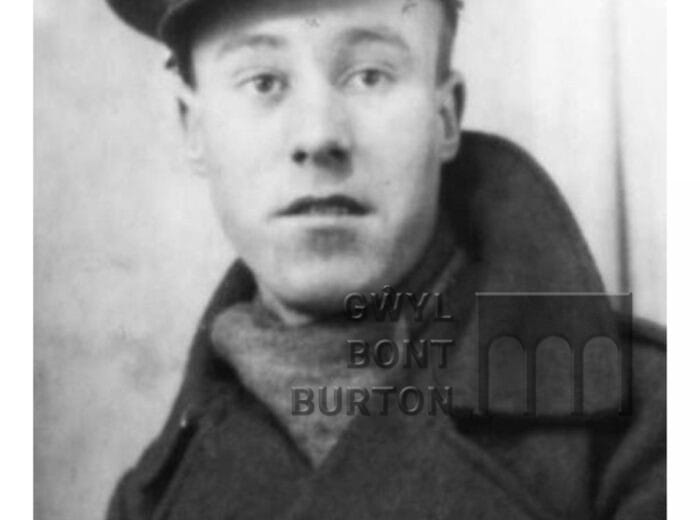
Air Fitter (A) Gordon Allan Channon (1916–1945) L/FX79055 HMS Exeter, RN

Air Fitter (A) Gordon Allan Channon (1916–1945) L/FX79055 HMS Exeter, RN

Gordon was born in Pontrhydyfen, the eldest son of Ernest Channon and Christiana Evans. The 1911 Census shows that his father Ernest was a 20-year-old boarder in Blaengwynfi, he was born in Crewkerne, Somerset and had presumably come to the area seeking work as a Coal miner hewer. The couple marry in 1915 and start a family. In 1920, Ernest dies at the age of 29. He leaves behind a pregnant wife and two young sons. By the 1921 census, a widowed Christiana was living in 6 Parkers Row, Tonmawr with her three young sons, the youngest, Davy was only 9 months old at this time. The family were sharing the house with Christiana’s parents and her seven siblings. In 1938, Gordon is living at 11 Illtyd Street with his mother and stepfather (John Kingdom). In 1939, the England and Register shows that Gordon still living in Illtyd Street Neath with two Channons, presumably his brothers, he is registered as working as an Aircraft fitter. In 1940, he marries an Elizabeth (Betty) Louvain Bray, from Idwal Street Neath. HMS Exeter was a York-class heavy cruiser built for the Royal Navy during the late 1920s. The ship was damaged in the Battle of the River Plate in the South Atlantic in 1939. After repairs, the ship spent most of 1941 on convoy escort duties in the Far East. On 27th February 1942, Exeter was damaged by a Japanese torpedo in the First Battle of the Java Sea and was escorted south by the Dutch destroyer Witte de With. Temporary repairs were made, and the following day Exeter was ordered to make for Colombo, she was hit again and lost all power. Now defenceless, Capt. Gordon ordered the ship to be scuttled, the Japanese meanwhile fired more torpedoes and the ship sank. The Japanese rescued 652 men including the captain, who were now prisoners of war (POW) and transferred to Macassar (Makassar) Camp in the Celebes (Sulawesi). Senior officers were sent to Japan (Zentsuji). Subsequently, men from Exeter, were transferred to various camps to work as slave labour in a nickel mine in Koyangi, or in construction of an airport in Java. Conditions in Japanese POW camps were appalling, men often tortured, beaten and starved. Documents show that Gordon remains on Macassar for over two years. On 20th April 1945, Gordon is recorded as dying from Pellagra, a disease caused by a diet deficient in vitamin B3 as well as Beriberi, a vitamin B1 deficiency. He was 28 years old. He is buried in Ambon War Cemetery, Indonesia. Addendum: Gordon’s extended family have kindly provided further information. His father Ernest, died at a relatively young age of 29 following a seizure, leaving a pregnant widow and two young sons including Gordon. Ernest is buried in Jerusalem cemetery, Pontrhydyfen.
Pte. Cyril George Howard (1920–1945) 1796273, Argyll & Sutherland Highlanders, 8th Bn

Pte. Cyril George Howard (1920–1945) 1796273, Argyll & Sutherland Highlanders, 8th Bn

Cyril was the younger brother of Idris who is also commemorated in this exhibition. In the 1921 census, Cyril is a 9-month-old baby living with his three elder brothers and parents Evan and Lily at Johns Terrace. Evan was employed at the Tor y Banwen Colliery in Tonmawr but was out of work because of the ongoing miners’ strike at this time. Cyril was married at the end of 1939 to a Tonmawr girl, Gwenda Arthur in Neath. However, we cannot definitively trace him to an address as there are two Cyril George Howards of the same age living in the area at this time. His parents can be found still living at 1 Johns Terrace. He is found in a newspaper report in April 1941 which stated that several Tonmawr men had been caught gambling on a Sunday on Tonmawr mountain, but it went on to state that he had since joined HM Forces. Cyril and Gwenda would go on to have four children together. Cyril’s military record doesn’t show exactly when, but it was likely that he enlisted around the time of his brother’s death in May 1941. The 8th Battalion Argyll & Sutherland Highlanders had already suffered heavy casualties in 1940 during the retreat to Dunkirk. But it was reformed after Dunkirk and saw action in Tunisia and Sicily. By March 1945, the regiment was fighting in Italy, taking part in the final stages of the Italian campaign. Cyril is recorded as dying on April 1st, 1945. He was 25 and is buried in Faenza War Cemetery Italy. After the war, a newspaper report shows that Gwenda is living in Tonmawr in 1955. Cyril’s parents were to stay in Tonmawr, Evan passes away in 1949. Lily passes away in 1958, she was living in Briton Ferry with her daughter. Her Obituary states that “Gwenda and family” attended.
Spr. Idris John Howard (1911–1941) 2093830, Royal Engineers 10 Bomb Dis Coy

Spr. Idris John Howard (1911–1941) 2093830, Royal Engineers 10 Bomb Dis Coy

Idris John was born in Tonmawr to Evan John (Collier) who was born in Porth and Lily George who originally came from Tonypandy. In 1911, the couple lived with Lily’s family in Blaenavon Terrace, Tonmawr with their eldest child William. By 1921, the family had grown. Idris had three siblings at this time, and the family were living in 1 Johns Terrace. Evan, like many men at that time was out of work because of the ongoing industrial dispute. In 1937, Idris marries Kathleen in Neath. We cannot definitively identify Idris in the 1939 England and Wales Register, but we think Kathleen is living in the Whitworth Bungalow, Tonmawr. At the outbreak of World War II, the War Office decided that the Royal Engineers would provide temporary Bomb Disposal (BD) teams until the Home Office could recruit and train Specialist ARP teams to do so. The first teams consisted of an NCO and two sappers and were required to dig down to the bombs and blow then in situ. In October 1939, the first bombs to be dropped on the UK by the German Airforce (Luftwaffe) were in the Orkneys. Despite almost non-existent equipment and little training, the teams learnt fast. By 1940, just 20 unexploded bombs were dealt with. This rose to 3,000 by September 1940. Between September 1940 and July 1941, over 24,000 bombs were made safe and removed. We do not have any information about Idris’ service, but he is recorded as being killed in action on 13th May 1941, he was 30 years old. Idris is buried in Macpelah Cemetery in Pontrhydyfen. His parents were still living in John’s Terrace in Tonmawr after the war and many of Idris’ extended family live in Tonmawr today.

Pte. Enoch Jones (1918–1940) 7358107, RAMC, 11 Field Amb.

Enoch came from a large family of older siblings and half-siblings; most being born before the family came to Tonmawr. His parents (Thomas & Emily Jane) originally came from Monmouthshire and had lived in Clyne and Resolven prior to them coming to Fforchdwm. This was his father’s second marriage. In the 1921 Census, the family are living at Pontycymmer, Upper Tonmawr. His father was supplementing his income, working as a woodman. The majority of miners were on strike during the spring and summer of 1921 due to PM Lloyd George and the mine owners opting to privatise the collieries which were nationalised in WW1. Census records in 1921, show that many working men in the area were out of work because of this dispute. They would soon return, working longer hours for less pay. In September 1939, the England & Wales Register showed that Thomas had retired, and the couple and their son Douglas were living in 12, Fforchdwm, although Enoch was not living at home at this time. Many single men had already enlisted by then. Records show that Enoch was a member of the Royal Army Medical Corps. By May 1940, Hitler’s western offensive had started and on May 19th, the British Expeditionary Force (BEF) Commander, General Lord Gort, ordered a withdrawal of troops toward French ports including Dunkirk. By the following day, German forces reach the French coast at Abbeville. It appears that Enoch was caught up in this action as records indicate that he was killed in action on this date, he was 21. He is buried at Heverlee War Cemetery, Belgium. Over the next days and weeks, Churchill ordered the preparation of vessels to evacuate the BEF which would begin in Dunkirk on June 3rd.
Sto. David Ivor Richards (1910–1942) D/KX 117129, HMS Leda, RN

Sto. David Ivor Richards (1910–1942) D/KX 117129, HMS Leda, RN

David Ivor Richards was born in Tonmawr. His parents David and Mary were also from Tonmawr and living in 2 Tip Cottages with their young family. David was working as an engine driver in the colliery. By the 1921 Census, Mary had passed away and his father had remarried to Nellie, and the family were now living in 5 Welsh Row, Tonmawr. The 1939 England and Wales Register show that David had married Irene (also from Tonmawr) and were living a few doors down from his father in 2 Welsh Row. He was working as a Steel works labourer. David was stationed on HMS Leda, a British Fleet Halcyon Class Minesweeper. Launched in 1937, Leda took part in Operation DYNAMO as part of the evacuation of Dunkirk in 1940. By September 1941, she was deployed for convoy and minesweeping duties were in Iceland and North Russia. On September 20th, 1942, Leda was hit by two torpedoes during poor weather. She sank within 90 minutes with the loss of 46 lives. David was one of those crewmen, he was 32. He is commemorated on the Plymouth Naval Memorial. Irene continued to live in Tonmawr and eventually remarried.